
Five ways that diabetes can impair your eyes and vision
Diabetes is a condition that impacts the body’s ability to produce and use insulin. The National Eye Institute reports that diabetes can cause several eye problems, including diabetic retinopathy, cataracts, and glaucoma. Diabetes patients need to be aware of these possible eye risks and take precautions to safeguard their eyesight. Here are five ways that diabetes can impair your vision and eyes.
Diabetes is a chronic condition when the body cannot properly regulate blood sugar levels. Over time, excessive blood sugar levels can harm blood vessels and neurons, resulting in a number of issues. Damage to the eyes is one of the most typical effects of diabetes. Diabetes can affect the eyes in several ways, causing cataracts, glaucoma, and diabetic retinopathy.
Millions of individuals worldwide suffer from a chronic illness known as diabetes. At the same time, there are many different types of diabetes, and all forms of the disease share one common trait: high blood sugar levels. Over time, having high blood sugar can cause a number of grave health issues, including eyesight and eye impairment.
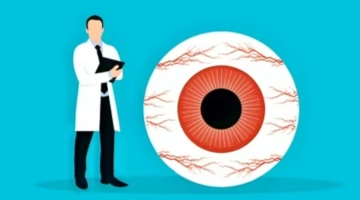
Diabetic retinopathy is one of the most common complications of diabetes, and it is a leading cause of blindness. The condition occurs when high blood sugar damages the blood vessels in the retina, the light-sensitive tissue at the back of the eye. Diabetic retinopathy typically develops slowly, and symptoms may not appear until the condition is advanced. Early signs of diabetic retinopathy include blurry vision and difficulty seeing at night. If left untreated, diabetic retinopathy can eventually lead to complete vision loss.
The most appropriate surgical procedure for each patient will depend on how severe their disease is, as there are several different forms of surgery that may be performed to treat diabetic retinopathy. Laser surgery is often used to treat diabetic retinopathy. The surgeon uses a laser to destroy abnormal blood vessels and seal leaking ones. In some cases, injections of anti-VEGF drugs may also be used. These drugs stop the development of new blood vessels and boost circulation. With early diagnosis and treatment, most people with diabetic retinopathy will not lose their vision.
Diabetes can cause a condition called proliferative diabetic retinopathy, which damages the blood vessels in your retina (the part of your eye that captures images). Diabetes can also damage the nerves that connect your retina to your brain, causing vision loss. In some cases, diabetes can lead to total blindness. Treatment for proliferative diabetic retinopathy usually involves surgery to repair the damaged blood vessels or to destroy the abnormal new vessels. In some instances, laser surgery may be used to treat the condition. If you have diabetes, you should visit an ophthalmologist (eye doctor) on a frequent basis so that any eye issues may be identified and treated right away.
There are several steps that people with diabetes can take to prevent the development of diabetic retinopathy, including controlling their blood sugar levels, maintaining a healthy weight, and avoiding tobacco use. People with diabetes should also have regular eye exams to detect and treat early signs of diabetic retinopathy. Thank you for reading!
References:
1. Lutty GA. Effects of Diabetes on the Eye. Investigative Opthalmology & Visual Science [Internet]. 2013 Dec 13 [cited 2022 Jul 24];54(14):ORSF81. Available from: https://pubmed.ncbi.nlm.nih.gov/24335073/
2. Henriques. [Diabetic eye disease]. Acta medica portuguesa [Internet]. 2015 [cited 2022 Jul 24]; 28(1). Available from: https://pubmed.ncbi.nlm. nih.gov/25817504/#:~:text=The%20eye%20is%20one%20of, only%20characterized%20by%20diabetic%20retinopathy.
Latest Posts
Your Eyes Are The Windows to Your Health!
Your Eyes Are The Windows to Your Health! There are many things our ey
Teaching & Learning Goes On!
Teaching & Learning Goes On! Many thanks to Manipal alumni for org
5 Superfoods for Super Sight: The Top Eye-Friendly Foods for Better Vision
5 Superfoods for Super Sight: The Top Eye-Friendly Foods for Better Vi
Happy Chinese New Year! – iDrkavitha
Happy Chinese New Year! – iDrkavitha Happy Chinese New Year! 
Bad contact lens habits to leave behind!
Bad contact lens habits to leave behind! Bad contact lens habit to lea
You are what you eat! What you should eat and avoid for better eye health.
You are what you eat! What you should eat and avoid for better eye hea